


👋 Hey, it’s Stephane. I help engineers become great engineering managers - whether you want to become one or are already leading a team.
Paid subscribers get The EM’s Field Guide, and access to the complete archive.
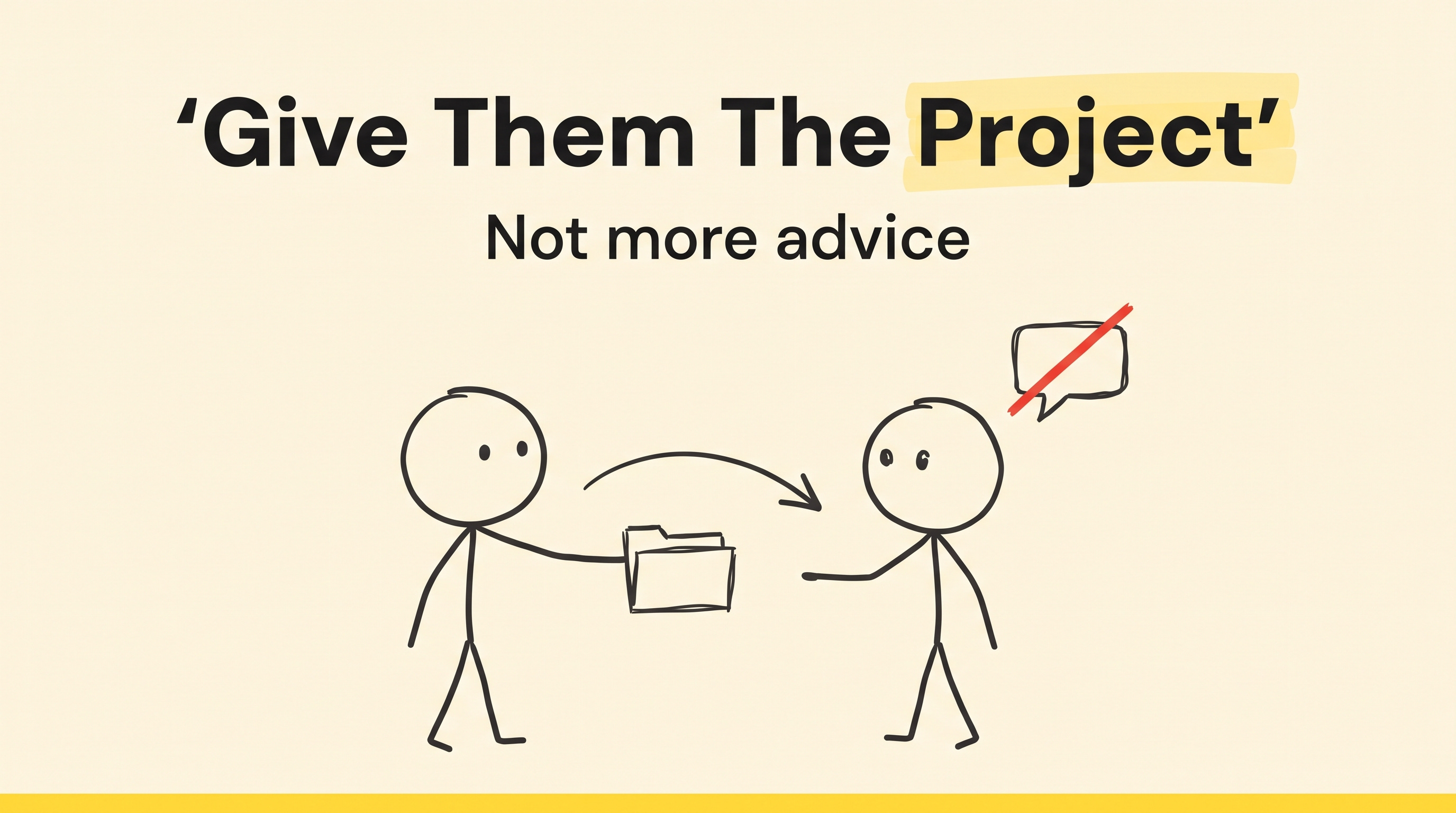
Ask any engineering manager how they grow their best junior and you’ll get a list of mentoring tips: pairing sessions, thoughtful code review comments, a career chat every quarter. All genuinely useful but none of them involve the one lever that actually predicts whether that junior becomes great: what they get assigned.
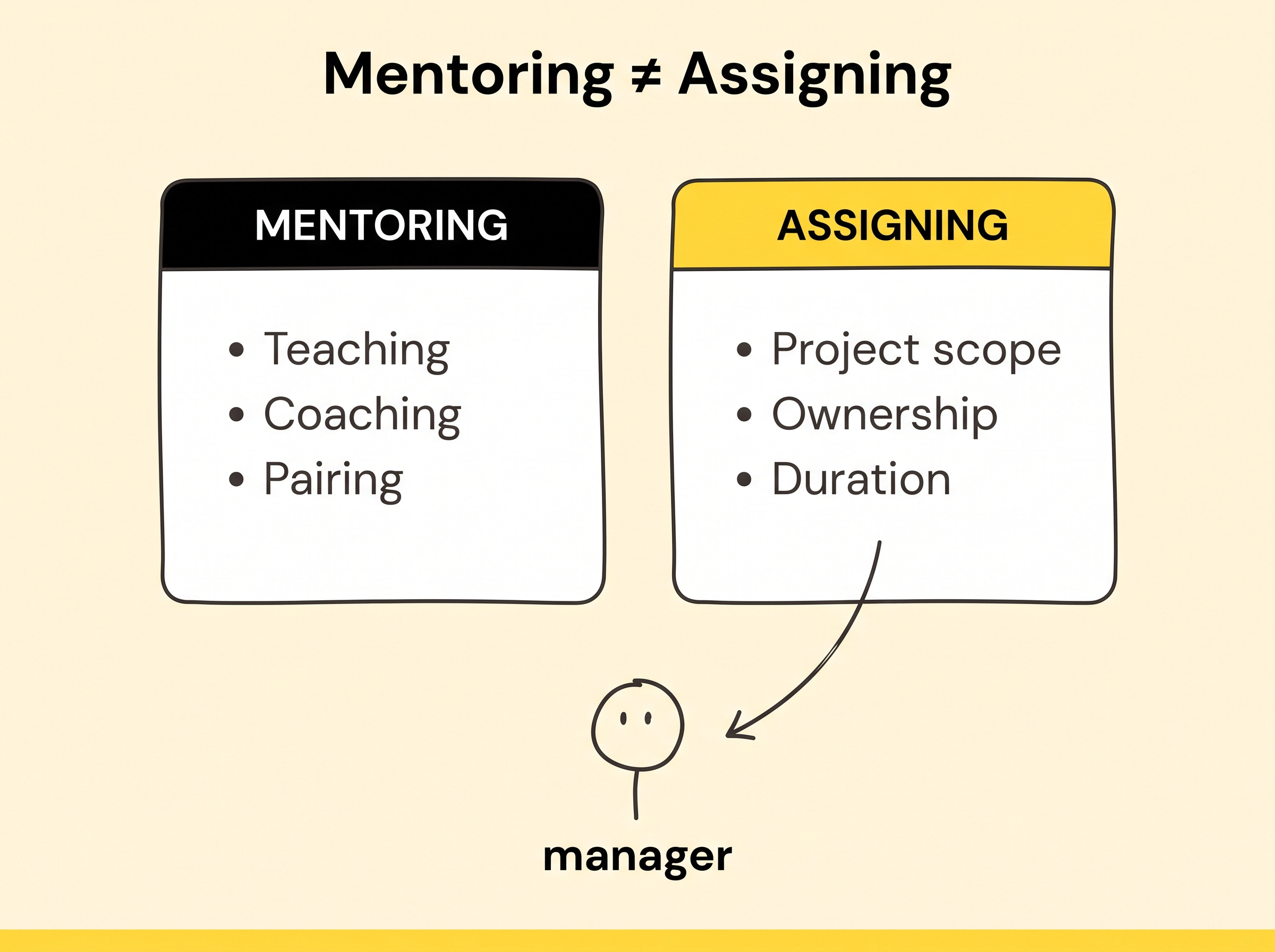
A senior engineer can teach your best junior everything they know about software design, trade-offs, and how to navigate the org. They can be a fantastic mentor. What they can’t do, no matter how good a mentor they are, is decide that junior spends the next quarter owning something bigger. That decision sits with whoever controls assignments. On most teams, that’s you.
Mentoring
Mentoring has a real impact on people’s careers.
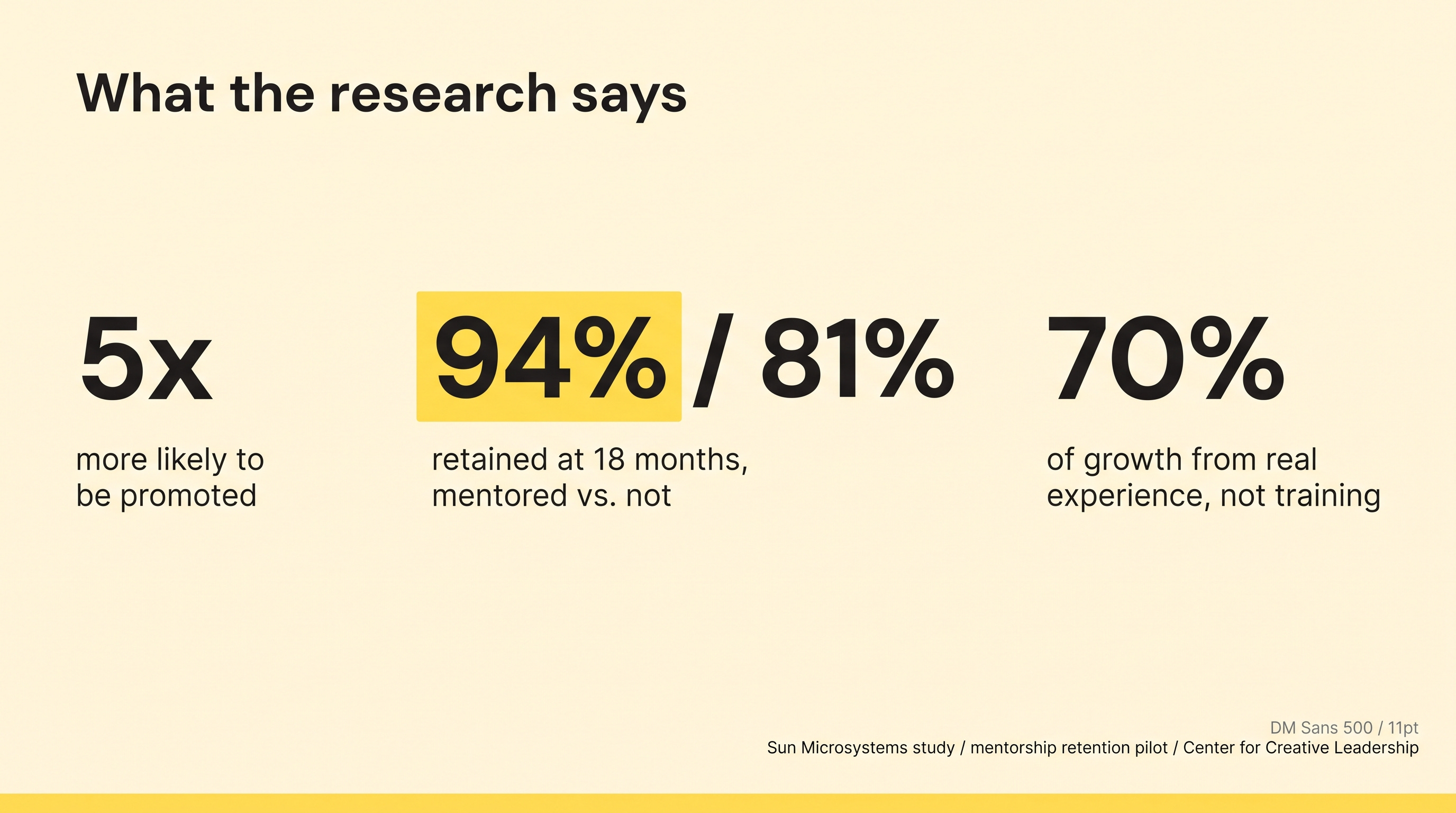
A long-term study at Sun Microsystems found that employees with mentors were five times more likely to be promoted than those without one. Around 25% also received a pay rise, compared with just 5% of employees who weren’t mentored. Another study of 120 junior engineers found that 94% of mentored engineers were still with the company after 18 months, compared with 81% of those without structured mentoring.
A team that keeps its best junior engineers avoids months of hiring, onboarding, and lost momentum.
Research from the Center for Creative Leadership also found that around 70% of leadership growth comes from challenging on-the-job experience, not courses or formal training.
The biggest opportunities for growth come from owning real work, making decisions, and learning through experience. And that’s something only a manager can provide. A mentor can offer advice and guidance. But only a manager can give someone the stretch projects and responsibility that turn potential into real growth.
So the question isn’t whether investing in high-potential juniors is worth it. The real question is whether you’re giving them the opportunities that help them grow.
The three categories of investment
It’s important to understand why “just mentor them more” isn’t enough.
Mentoring and managing are different. If you treat them as the same thing, you can spend months helping someone without actually changing what they do day to day.
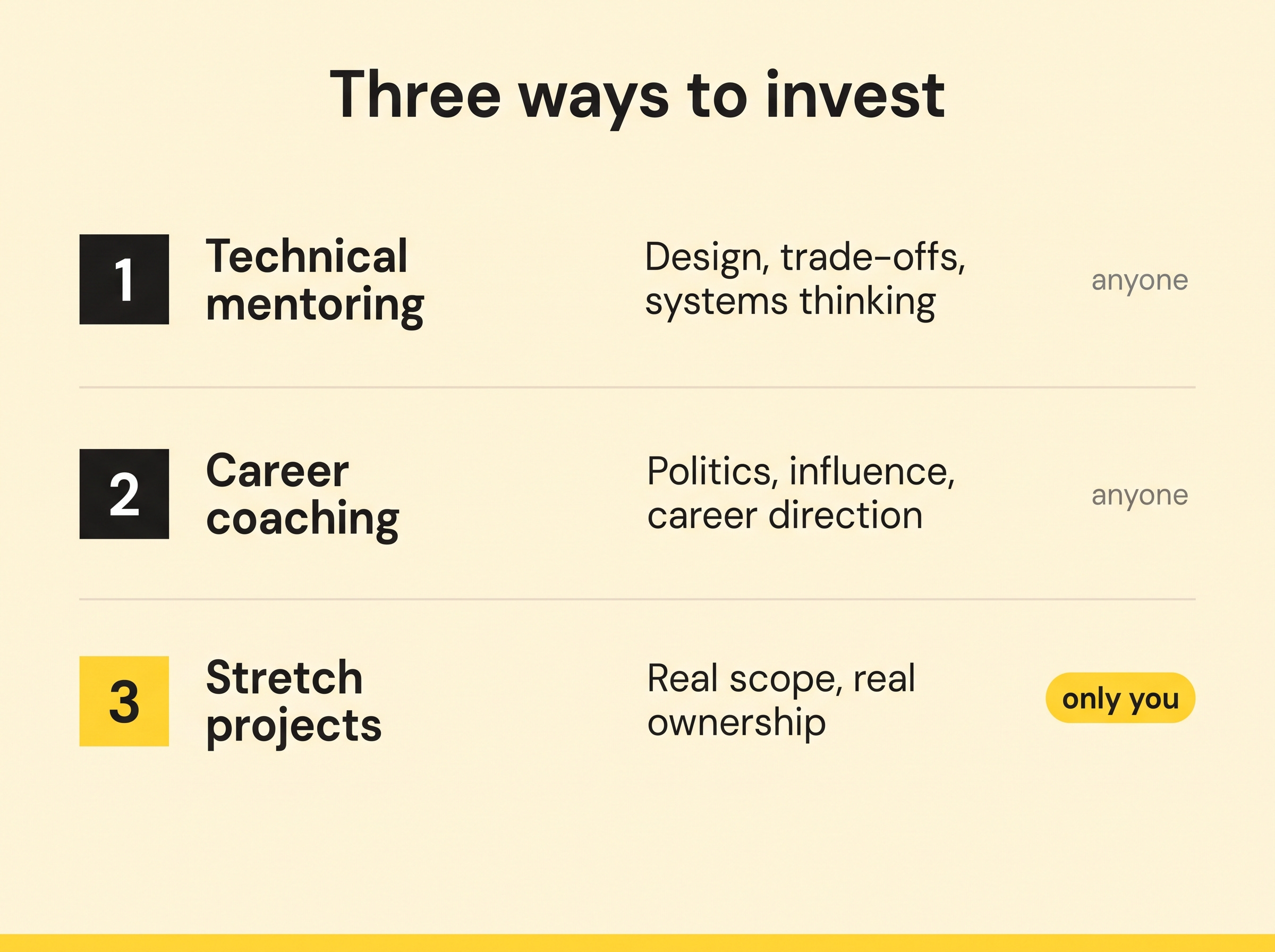
Growing a junior engineer usually comes down to three things:
Technical mentoring
Teaching them how to design systems, make trade-offs, and think beyond writing code. This is what helps someone become trusted with bigger technical problems.
Career coaching
Helping them navigate the workplace, build influence, and figure out the kind of engineer they want to become, not just how to complete their next ticket.
Stretch projects
Giving them work that’s just beyond their current level, with support along the way. Research shows these assignments work best when they last a few months and come with real backing from their manager.
The first two can be done by almost any experienced engineer. The third is different. Only a manager decides who gets which projects. Only a manager can give someone the opportunities that actually grow their skills and responsibilities.
That’s the difference between teaching someone and helping them grow. Many engineering managers do the first, but forget about the second.
What happens when nobody gives them real ownership
If someone gets mentoring but never gets meaningful responsibility, their growth eventually slows down.
This pattern often lasts for years. Even if their manager changes, the habits stay the same because they’ve learned, over time, that they’re there to execute, not to own.
You start to see the same behaviours:
They avoid changing code they didn’t write.
They stop asking why things work and focus only on getting the task done.
They wait for someone else to make the important decisions.
And then... when real ownership is finally offered, they often hesitate.
After years of never being trusted with important work, many people stop seeing themselves as someone who should own it.

This is why giving juniors ownership matters. Someone is teaching them what their role is, whether that’s intentional or not.
If you give them real responsibility, they’ll learn to think like owners. If you never do, they’ll learn to wait for permission.
So how do you actually help someone grow?
In the rest of this article, I’ll cover three practical techniques:
How to choose stretch projects that teach ownership, not just execution.
A simple three-step process that helps juniors make better decisions on their own.
How senior engineers without management responsibility can still create these opportunities, and how to get a reluctant manager on board.
