


👋 Hey, it’s Stephane. I share lessons, and stories from my journey to help you lead with confidence as an Engineering Manager. To accelerate your growth see: 50 Notion Templates | The EM’s Field Guide | CodeCrafters | Get Hired as an EM | 1:1 Coaching
Paid subscribers get 50 Notion Templates, The EM’s Field Guide, and access to the complete archive. Subscribe now.

"Using AI is no longer optional"
When Microsoft's internal memo said managers should evaluate AI usage in performance reviews, it sparked a lot of debate across engineering teams. GitHub's CEO backed this by saying that evaluating AI use is 'totally fair game',
Most companies haven't really done this yet. But the writing's on the wall: AI proficiency is becoming a core engineering skill, and pretending otherwise won't help your team.
The problem is that I don’t think as an industry we know how to evaluate AI usage. I thought about it and I've developed a playbook working with very senior engineering leaders who are also thinking about this.
Why this matters now
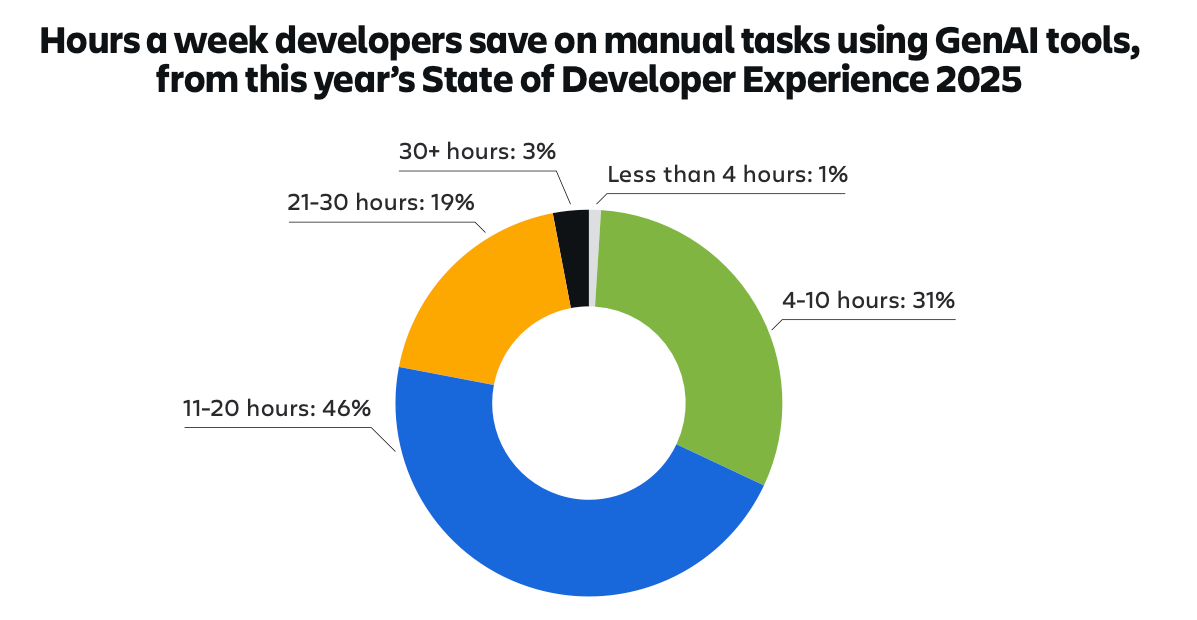
68% of developers save 10+ hours per week with AI. Some engineers are leveraging it to tackle problems they couldn't handle before. Others barely touch it.
If you ignore this gap in performance conversations, you're sending a message: AI skills don't matter for career growth. Your best AI adopters will notice. They'll start looking at companies that recognise and develop these capabilities.
What most managers get wrong
The temptation is to measure usage: lines of AI-generated code, tool adoption rates, prompt frequency. This misses the point entirely.
Github’s CEO said measuring "lines of code written with AI" is "easily gamified" and he's absolutely right.
The real opportunity isn't tracking tool usage, it's understanding how someone approaches the evolution in how software gets built.
A framework to follow
1. Problem judgement
What you're looking for: Do they choose good problems for AI to solve?
You want to see engineers using AI for boilerplate code, documentation, testing, and repetitive tasks. But still writing complex business logic, making architecture decisions, and handling security-critical code themselves.
2. Quality control
What you're looking for: Do they treat AI output as a starting point, not a finished product?
Good engineers iterate on AI-generated code. They understand it, test it, and improve it. Poor ones copy-paste what the LLM spits out.
3. Learning trajectory
What you're looking for: Are they getting better at working with AI over time?
The point here of course is not to track their prompts or start watching over their shoulder. Instead, look for signs of improvement in how they use AI tools.
4. Knowledge sharing
What you're looking for: Do they help others get better at AI?
The best engineers document useful prompts, help in code reviews, and contribute to team AI practices.
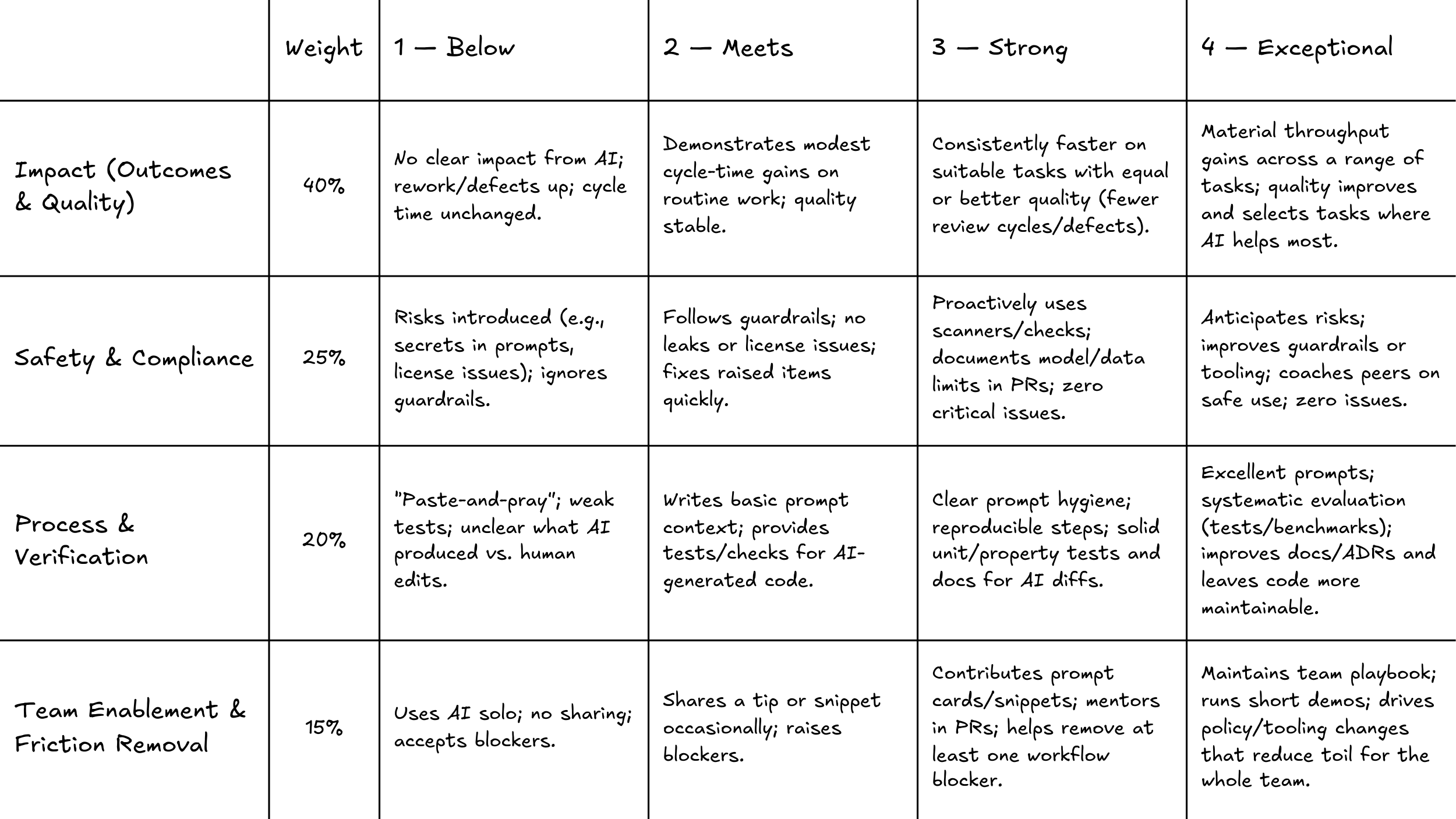
AI usage rubric (for Engineering Managers)
How to use:
Rate each dimension 1–4
Multiply by the weight
Sum to get an overall /4.0
Final thoughts
AI proficiency is becoming a standard for engineering roles. Managers who figure out how to evaluate and develop these skills thoughtfully will build stronger teams.
Start with understanding how your engineers currently use AI, focus on judgment over usage metrics, and integrate the conversation into your existing performance framework.
That’s all, folks!
See you in the next one,
~ Stephane