


👋 Hey, it’s Stephane. I help engineers become great engineering managers - whether you want to become one or are already leading a team.
Paid subscribers get 50 Notion Templates, The EM’s Field Guide, and access to the complete archive.

Where is your engineering team on the AI adoption ladder? (sponsored)
Find your stage, spot the one bottleneck holding you back, and see what to fix next.
Thanks to re:cinq for sponsoring this newsletter!
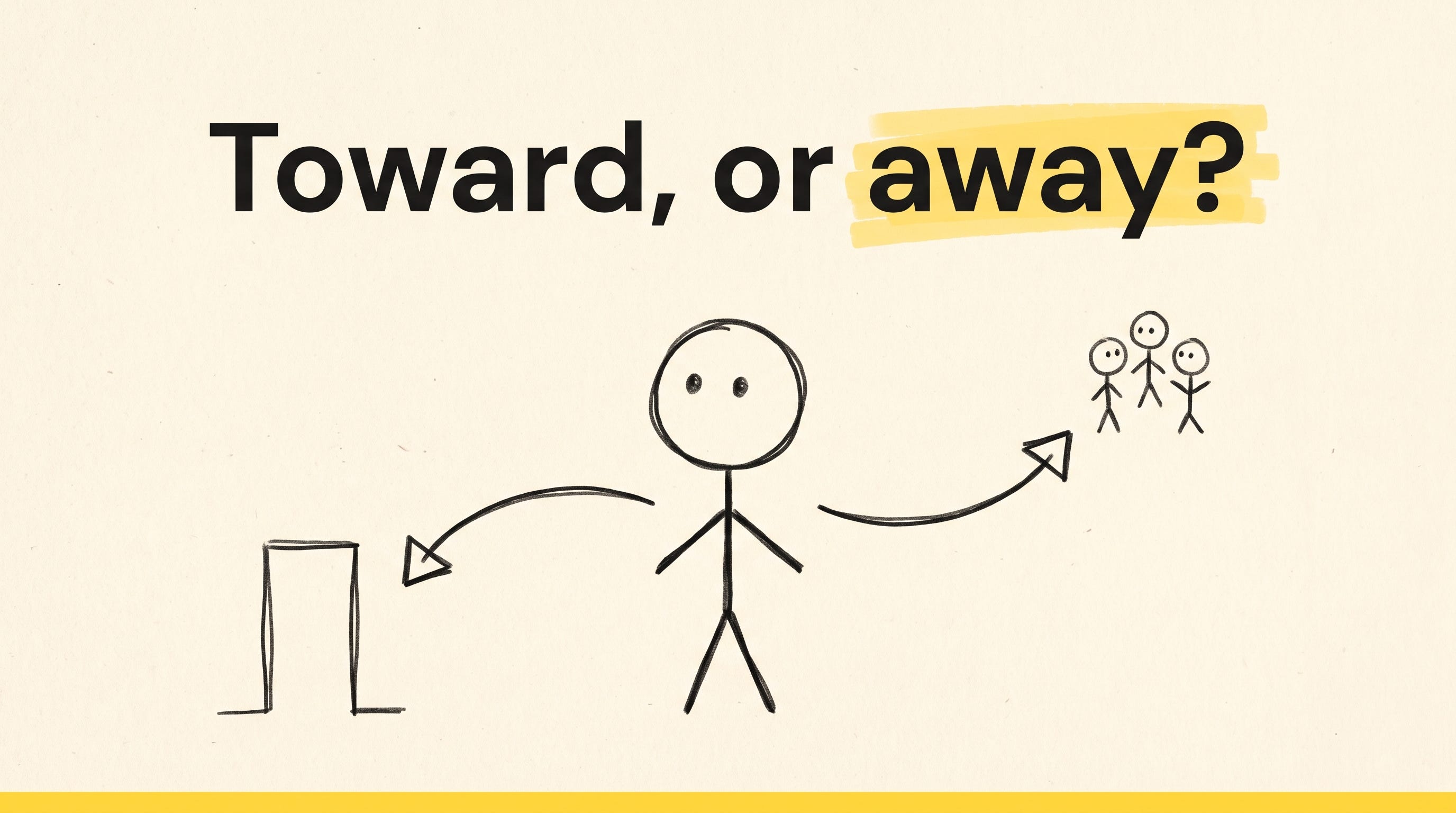
A few years ago, one of my reports told me he wanted to be a manager.
At that point he was the most senior person in the team, had been mentoring two junior engineers, and people seemed to be going to him when they were stuck.
The series of questions I asked next involved a lot of “Why” and “What”
Why do you want to be a manager?
What is it that gravitates you to that role?
Why now?
I have generally given the advice to most engineers I work with that spending a couple of years as a manager is a great thing for everyone to do. I think it is a great role to undertake and offers useful skills (and you can always decide to get back to IC work later).
That time though, I was not convinced.
A lot of what I heard was about “him”
“AI is taking software engineer jobs so I have to find something different to do”
“I don’t want to be writing code all my life”
“I like being in meetings”
“Being an engineer is stressful, I want a more relaxed role”
Not a lot, or not a thing actually about “others” which is at the very core and centre of the role: help making others grow.
There’s a lot of crap you have to deal with as a manager. If supporting people grow, which is not easy, is not what motivates and energises you then altogether the role will feel pretty miserable.
“I want to become an Engineering Manager”
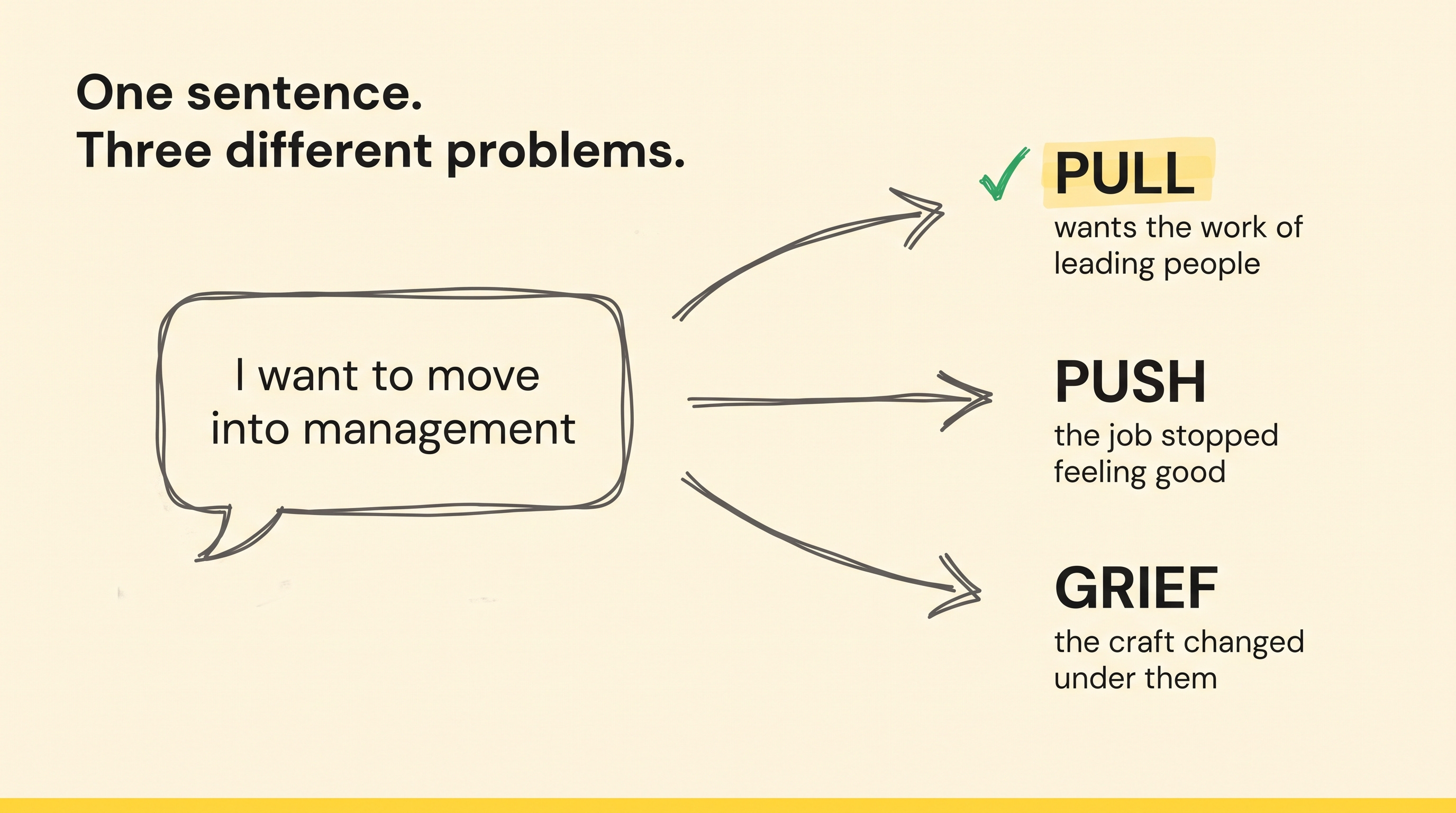
I think there are three different reasons why someone says this.
The first one is that they find the role interesting and exciting. They’ve noticed they enjoy helping others succeed, mentoring, coaching, or even help resolve disagreements. At some point they see they can have more impact through other people than their IC work.
The second one is more of a push than a pull. They just don’t enjoy their current job anymore… maybe they’re not as intellectually stimulated and feel bored. But many people would be scared to say this to their manager. It’s easy for it to sound like a lack of ambition and reflect badly in performance reviews.
The third one is become more and more common in the past 18 months. Engineering has changed, and is still changing with AI which not everyone loves. A lot of engineers don’t enjoy the craft of engineering as much as they did in the past. They used to spend days building new things, and now they
review AI-generated code (a lot of it!!!)
prompting AI
review plans that AI gives them
suss out BS that AI tells them
and generally supervise work that AI did - either on their laptop, or coming from a colleague.
Being an engineer today is certainly not like how it used to be 5 years ago, and I think some people feel some grief about that.. which is a completely legitimate way to feel about it. But not a strong reason why you should become a manager.
Management is hard and tiring
This is the bit that often engineers don’t see. If someone’s tired of solving hard engineering problems, people problems are not easier.
LeadDev surveyed 617 engineering leaders in 2025, and I wrote about the full findings from that report when it came out. 22% of them said they’re at critical levels of burnout and only 21% were in the healthy band. 65% had taken on more scope over the previous year, 40% had more direct reports, and 38% were working longer hours than they had 12 months earlier.
When they were asked if they wanted to stay in a leadership role the main considerations that were mentioned were:
salary
fear of losing technical skills
actually enjoying the management work
Only the last one was really about enjoying the job.. and many Engineering Managers do eventually think about becoming an IC again.
Nearly half (47%) of managers of engineers in that survey had at least considered moving back to an individual contributor role in the previous 12 months.
I once hired an engineer who had become a CTO and quit after six months to come back and write code on my team. He’d got the title many of us dream of, but he realised quickly that this role was really not what gave him joy and fulfilment.
Engineering skills ≠ Management skills
There might be an engineer in your team that you feel would be a great manager.
Sponsoring this engineer to become a manager probably feels like the natural thing to do, or else it might be seen as blocking their growth.
Gallup studied 27 million employees and found that 1 in 10 people are naturally good at managing. Google’s Project Oxygen ranked the eight behaviours of its highest-rated managers and put “has key technical skills” last.
We know by now that skills needed to be a great engineer differ greatly from skills needed to be a great manager. They are to very different roles. In fact, being a great engineer tells me very little about whether this person would be a good manager, or even whether they’ll enjoy being one.
I am not suggesting here that we should be rejecting great engineers from becoming managers. My point is that we should be deeply questioning the reasons why they’re interested to change paths to form an informed view.
Here are the three questions I use to work that out, and what I say when my honest answer is “no”:
